


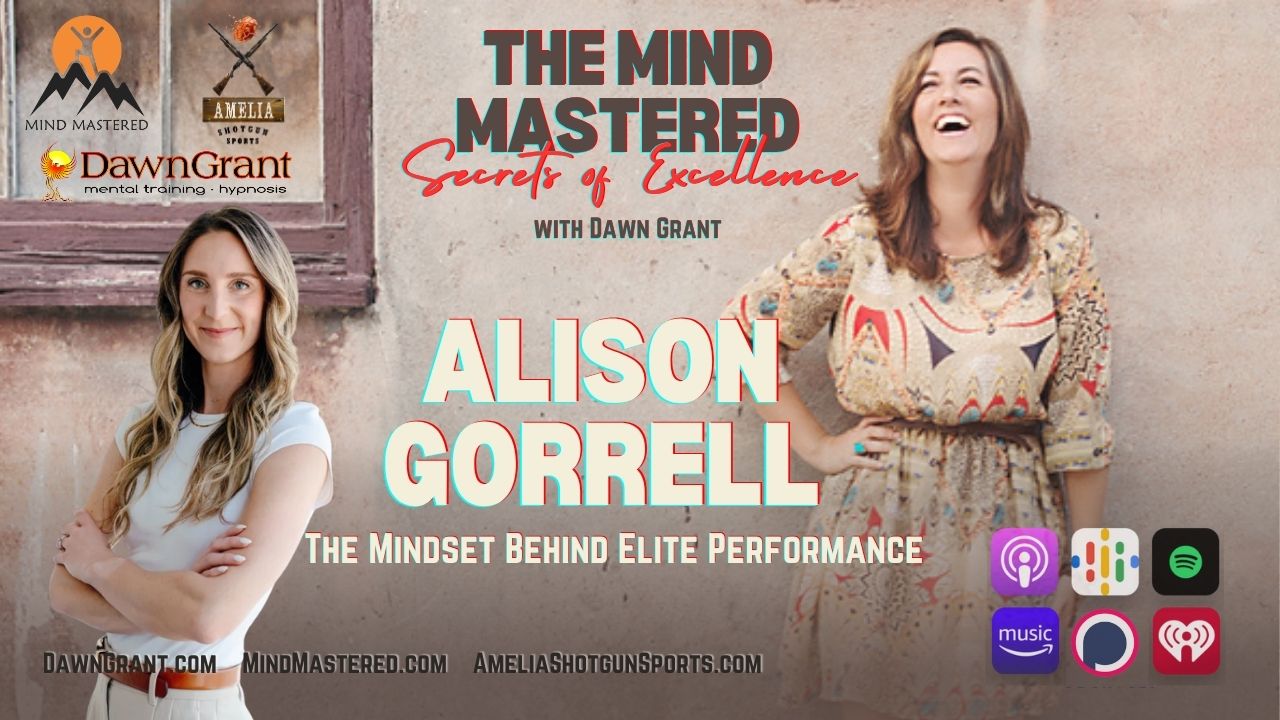
In this engaging conversation, Dawn Grant sits down with former professional basketball player and mental performance coach Alison Gorrell to explore what separates good athletes from great ones. Drawing from eight years of professional basketball across Europe and Australia, Alison shares how trusting herself, embracing change, and developing mental resilience shaped both her athletic career and her coaching philosophy.
Together, they discuss the importance of intrinsic motivation, adapting to adversity, building confidence through action, and why fear often keeps athletes from performing at their best. The conversation dives into flow state, instinctive performance, sports psychology, and practical strategies for helping athletes trust their training instead of overthinking in competition.
Whether you're an athlete, coach, parent, or simply striving to perform at your highest level, this episode offers valuable insights into developing the mindset needed for lasting success.
Podcast Transcript:
Dawn Grant (00:00)
All right, folks, welcome to the Mind Mastered Secrets of Excellence with Dawn Grant. I'm excited to have you here and to be following along. And of course, I always have awesome people that I love to chat with. And this one in particular, her and I are doing some of the same things. So performance, coaching, mental training type stuff. So I'm excited to hear Alison's approach and her expertise and all the great things that she brings to the table and some of the things that we probably even have in common.
So I've got Allison Gurel with me here and she's a mental performance coach, but she's also a retired professional basketball player. So she's not messing around and she's coming from that angle and having experienced the mental game herself, I'm sure. So thanks for being here, Allison.
Alison (00:49)
Thanks so much for having me.
Dawn Grant (00:51)
Sure thing, sure thing. Well, I'm excited to hear so much about what you've been up to and what brought you to where you're at now. So I gave some little baby highlights. Go ahead and tell us the greatest things about yourself and what you've accomplished.
Alison (01:06)
Well, I started off playing division one basketball and then from there went overseas and at the same time of playing professional basketball, I got my master's in sport and exercise psychology. And then I got to play pro throughout Europe and Australia for eight years. So I bounced around to a bunch of different places and got to do some awesome traveling and also work with some really awesome teams out there doing mental performance coaching. And then
Nearing the end of my basketball career, I started my own business as a mental performance coach. And then I've been doing that now for going on six years. And I'm really fortunate to get to work with from youth to pro and Olympic athletes. So it's been really awesome.
Dawn Grant (01:51)
That's so cool. And I look forward to hearing how that all kind of transpired for you over the years. So growing up, have you always loved competing and being an athlete?
Alison (02:02)
yeah, yeah, I definitely from when I was young, just wanted to compete at everything. My older siblings were all athletes and my parents were super active. So we were just competing and doing all types of stuff. played all types of sports, but definitely settled on basketball as being the one that I really wanted to pursue.
Dawn Grant (02:22)
I gotcha. Without going off on a tangent already, or maybe we could, I've always been fascinated with how people tend to have that competitive edge or not, right? Like it's either there or it's not. So how many siblings do you have? And did they all have that competitive nature?
Alison (02:38)
I have three siblings.
Yeah, I would say we're all pretty competitive. think that, so I'm the, I have an older brother and an older sister and then a younger sister. And I think me kind of being in the middle made me the most competitive because I really wanted to compete with my older siblings. And then I could think just being something about being the middle child just made me really want to go after everything.
Dawn Grant (03:07)
Gotcha. And what about your
parents? Were they competitive athletes or anything?
Alison (03:12)
My dad,
super competitive. played a lot of different sports. He played basketball. He ran. My mom was, as an adult, she was playing tennis when I grew up. She didn't play like college sports or anything like that, but sports was a big part of everything we did as a family.
Dawn Grant (03:31)
I gotcha. I got ya. So did you know from a fairly young age that you wanted to be a professional basketball player?
Alison (03:40)
You know, at the, when I was really young, I don't think I really thought about going pro. I just was so excited about the day to day of competing. And I think it was a little bit different when I was growing up versus kids nowadays, because now there's all the social media and everyone's talking about those things so early on. But when I was growing up, it was more just like, what am I doing this weekend kind of thing? But I, I knew I wanted to be really good and I was really committed from a young age. So I.
Dawn Grant (04:02)
All right.
Alison (04:09)
I thought about college and stuff like that, but I don't think it was always on my radar that I wanted to play professional until I got a little bit older.
Dawn Grant (04:18)
Okay, so then what happened?
Alison (04:20)
So then once I got into like high school and started taking it more seriously, I grew up in a smaller mountain town. And so I didn't have as much access early on to like, there was nobody else around me that was playing at the level that I was playing. So I had to like drive down to the city and then kind of get into these different spaces where it was more normal to get recruited to play division one and be around other really high level athletes. Cause that wasn't really normal in my community.
So once I got exposed to that, that's when I think my eyes opened up a lot more about like, all right, I want to play college. I want to play pro. What can I do with this? So then just getting to play, a you and travel around as a high schooler and get exposure and stuff. That was kind of what I knew. And then I was able to get recruited and go to college for it.
My path in college was a little bit unexpected. ended up transferring after my first couple of years, but ultimately it got me on the path to where I am now.
Dawn Grant (05:23)
Well, just the fact that you're wanting to drive or willing to drive to get to a location or a town where you had more opportunities says a lot, because you're probably still fairly young at that point, right?
Alison (05:35)
For sure. think that my parents, have to credit them for so much of it because I think they were always, my dad coached me a lot when I was growing up. He coached me in high school too, but they were always just supportive of what I wanted to do. They weren't putting pressure on me. They weren't saying I had to do this or had to do that. was my passion was leading me. And so they were willing to go wherever I needed to go to make that happen. And I think they also realized that
where I was at, it wasn't necessarily going to provide me with enough exposure or enough challenge to be able to get where I ultimately wanted to go.
Dawn Grant (06:08)
Woof! Woof!
Right, right. I feel like I'm watching kind of little dominoes get set up, you know what I mean? And this process, because there's so many different potential turns along the way. Like you could have maybe not been interested or passionate about it. And I'm sure you've seen where parents tend to want it more than the kids, right? And then how is that kid gonna make that drive?
without doing it begrudgingly, you know, if it's not really them that's wanting to do it, right? You see a lot of that in your experience.
Alison (06:50)
For sure. think that's one of the biggest things nowadays because a lot of parents are so fixated on my kid has to be the star, my kid has to go play D1 or whatever it is. And I think that really kills that intrinsic motivation for kids, which is the most important type of motivation we have because those external motivators, that's going to...
go away at some point, especially once you get to college. think I see a lot of people be so motivated to get to college, because that's what everybody's telling them to do. Then they go to college and then suddenly they're like, why am I doing this? This sucks. have to like, it's a job to me. And I think that what I was able to foster from a young age was this was a passion for me. And so even when I got to college, even when I went pro and it was a job and there was a lot of responsibility.
Dawn Grant (07:27)
Yeah.
Alison (07:41)
The thing that was guiding me the most was that intrinsic drive and the love for it.
Dawn Grant (07:45)
That's a great secret of excellence there, right? If you don't have that internal drive yourself. And I've seen that as a hypnotist in my own practice related to all different topics. Like, let's say, and it's not as common now, but back 20 years ago or something, a wife might've called because she wanted her husband to quit drinking, or a wife might've called because she wanted her husband to quit smoking.
And not only does that happen with adults, but a parent could call because they wanted their kid to stop sucking their thumb, or a parent could call because they wanted for their child to excel further in their sport. And really, it's all the same thing, right? If that person doesn't want to do it themselves, then they're not going to put in the effort.
So your story is in alignment with that and it makes it almost like obvious the level then that you could go. I obviously everybody's different with their abilities and all that, but you have a few things lining up for you already early in life, right?
Alison (08:54)
For sure. Yeah, I definitely think so. And I think that was coupled with the lack of pressure my parents put on me. It was never, have to do this. It was, I wanted to do it. And then they were just supportive of it and weren't ultra critical. were just, even though my dad was a coach, he wasn't ultra critical. We would discuss the games in a really healthy way and just be excited for it rather than it feeling like this.
ultra high pressure thing that I think is prevalent for a lot of kids these days.
Dawn Grant (09:25)
another important step along the way, right? Because right in that, it's like such a selfless act on his part to just support you in wherever you were at and as positive as possible. So really neat. So here you are, you're in college and what happens to the point that you start getting recognized and become a professional?
Alison (09:51)
So after my first two years of college, just really was not having a good experience. I was getting to play. I was actually a starter. But the role I had, the connection I had with the coach, it just was not great for me. I was super anxious every time I played. It was not fun. was just a bad environment for me. So I decided to transfer. I think nowadays, it's totally normal to transfer. Back when I transferred, it was
frowned upon. was like, you're not mentally tough enough. Like you, like you got to push through, you got to stick it through kind of thing. But I just realized that for me, I, everything I had worked for was just going to be thrown in the trash. If I just stayed there and was miserable and went from loving my sport to hating it. So I ultimately decided to transfer, which was a great decision. And I enjoyed basketball, the next years and
I was able to leave the team, be a captain, all of those things. And then I, when I was finishing, I was kind of trying to figure out what was next for me. And I knew I wanted to continue playing, but I didn't really know what that looked like. And again, there was less visibility on how do you keep going? And then I was really fortunate that there was a athletic academic director. He was like head of the program, which
He just recently passed away, which was super sad, but he was amazing. And he basically just had a conversation with me of like, what do you, what do you want to do? And I was kind of telling him and he just happened to have a connection overseas that had a, a team, but was also connected to a university over there. So I could do my masters in play and he got me connected and
He taught me a really valuable lesson that sometimes you just have to have a conversation and speak up about what you want and you never know what doors are gonna open. that's really stuck with me since then. Sometimes you do have to just put it out there. So I got connected with them. I had a few other offers to just play professional, but this one seemed really good because the coach was great, really welcoming to me. This was to go to the UK and...
play on the pro team, they would also pay for me to get my masters. And at the time I did not know I wanted to go into sports psychology, but they showed me the different options that I could do and I just had never heard of it. Like in America at the time, now it's prevalent to hear sports psychology. Back then there was maybe three schools in America that offered sports psychology as a masters and no one talked about it. Like we didn't have resources at college to talk to anybody and I...
And it just sounded really interesting to me because I always felt like, wow, people could master the mental side. They'd be able to be so dominant as an athlete or something like that. Cause I could see it really black and white for me of when I was miserable the first couple of years and not myself and how I played then versus what I was happy and the type of player I was there. And so that kind of was the jumpstart of my career. So I signed with them.
went and played professional with that team and did my masters over the next two years, which was kind of the start of everything.
Dawn Grant (13:14)
That's so great. I love your story. And you've touched on like two more important things. It's funny because I'm like, yes, yes, yes. The fact that you trusted yourself, again, at a fairly young age, when you weren't jiving with the coach, when it just didn't feel like it was the best fit for you, and even social pressures to possibly stay and in some cases, maybe not yours, your parents might not have encouraged you to.
Alison (13:23)
Hahaha.
Dawn Grant (13:42)
you know, move on and transfer, but it's so important to trust yourself, right? And I imagine because of the way that you were brought up that you had that ability, probably better than some people, because you weren't like being dictated to and told what to do. You had an opportunity early on to really listen to yourself and to receive support in that.
So that's awesome, because yeah, you could have stayed and had a whole different experience and you just intuitively knew. So that's neat. then clarity and an understanding of like, who am I and not being afraid to talk about it, or even if you were, like you still overcame that and you talked about it. And I've seen over and over again in my own life, that saying it's who you know, but it's also like serendipitous moments and
meeting the right person at the right time. And we're blind to that when we're too busy being upset. You know, we're too busy upset about our life or frustrated or replaying all the bad stories or whatever. These cool things are happening all around us, but we don't see them. But when we're in a place of like joy and happiness and feeling good and seeing the good in situations, then here's this opportunity.
and you're able to connect with it and then share with them. And then he goes, by the way, I know something. How great. Yeah, so you go out, were you afraid? Because at what point, how old were you at that point to go overseas and just move out there?
Alison (15:23)
Let's see, when, how old was I when I graduated college? I must've been like 21, 22, probably 22, I think at that point. But yes, I was very scared. Every time I went overseas, I was nervous getting on that plane because it's not like it is in college where you get to go out and you visit and you meet people and you know what you're walking into. You're blind to all of it. You just walk in and...
And it was a little different this first time, because I was going in with the university side of it as well. But every other year when I'm signing a pro contract, you don't know anything. You maybe talk to the coach, maybe, and you have a contract in hand, but then you're just walking in completely blind. You don't know where they're going to put you up to stay. You don't know anybody there. So yeah, it's pretty scary. And I think that that was a challenge, but the best thing that I could have done.
because I think it really pushed me outside of my comfort zone and made me get comfortable with any type of situation. Like I think if you talk to any athlete that's played internationally, you just hear the craziest stories and I have some crazy stories about my time over there, but I think it just makes you so much more aware and grounded and just being able adaptable. guess that's what it is. think that.
when we get so stuck into a routine or what's comfortable for us, we're not sharpening the skill of adaptability. And the more you just force like every year of my life for like a decade, I was moving every year. And so I had to be adaptable. And I think that was something that really, really has benefited me in my career and where I'm at now.
Dawn Grant (17:11)
For sure. And then even as a peak performance coach, because when I think of the word adaptability, adaptability related to an athlete, a competitive athlete, I mean, you've definitely got just like, you know, here I am in a town at a tournament and, you know, athletes are always showing up with the unknown ahead of them, even if it's not overseas, right? This town that they're in.
I travel a lot to tournaments, not as a competitor, but as a mental trainer, The bed, like I'm in an Airbnb right now. The bed can be horrible, right? So, you know, then you're not getting a good night's sleep. It's not even just the bed, it could be the pillow. It could then be like, there's so many different things that's showing up and not knowing where you register or.
Alison (17:51)
Yeah.
Dawn Grant (18:03)
You know, certain like for me with clay shooters, they're squatted. They don't necessarily know who they're squatted with ahead of time. So then they meet their squad or their team. And then, you you might get that personality of a know it all or, or, know, something like that. There's so many different things that can happen, right? It's so important to be adaptable as a successful competitive athlete in all these areas, even the miss, right? Cause that's the next really big spot.
Alison (18:16)
Yeah.
Dawn Grant (18:32)
to be adaptable. It is what it is and you need to accept it and not get upset about it. So I bet a bunch of your own journey plays into how you're helping. So let's move up. So how many years were you a professional basketball player?
Alison (18:52)
Just about eight, seven and half or so. I did two years when I was doing my masters and then I stayed one more year in the UK. I was doing a lot of sports psychology work while I was there, because I got a lot of connections through the school. And then from there I to Switzerland, Germany, Australia, and the UK is where I played.
Dawn Grant (19:17)
Nice, nice. I just went overseas for the first time. I've traveled all over the US and I've traveled like Caribbean and Mexico and all that, but never like over the ocean and got married just a few months ago in Italy. And that was the first time for both of us there. And on the front end.
We just were so clueless, you know, and so many of my friends said, it's great over there. It's so easy to travel. It's safe. You know, the only thing you have to really worry about is pickpocketing and it's not you can get on any tram, any train. You know, it's really easy. And I just was like going into the unknown. I'm like, no, I'm not. I'm going to just buy a package. And now that we've gone over there, so cool.
Alison (20:00)
Yeah
Dawn Grant (20:04)
So cool to see a culture that like Italy is all Italian, right? Like it's this immersion in Italian and to have born and raised in the US and not see how when you go to each country, there's like an immersion that it's not just, you know, little Italy in New York that's tiny. It's like everything, you know, and there's so much about it that I just absolutely love. So for you having that in your early twenties is...
how just another great experience for you, right?
Alison (20:37)
yeah, it was incredible. And I think it's transformed the way I see the world, just living in a lot of different cultures. And then on your team, you have people from all over the world too. And so I think that's been huge for my work as well, just because you start to understand how different people think from different, like a different cultural background and stuff like that, and how that's so influential with our mindset. So I think just having a little bit more of an understanding because I've
been to different places and seen it and felt it. think that has really changed the way I see things.
Dawn Grant (21:09)
that yeah, when I helped VJ sing when the FedEx Cup in 08, at one point he was ready to tell the whole world and then the next day he was like, I'm not telling anybody. And if any of you guys tell anybody on my staff, you're all fired. And the way that people worked for him talked to me through that was like, he's from a different culture, Dawn, and to recognize
just his mindset of that culture and how it probably affected what he would go public with and what he might say or not say or whatever was really interesting because every culture is different and how they view women and how they view it, maybe an authoritative figure or somebody in the know and whether they're willing to publicly go out there and say something like that.
Have you noticed kind of like pros and cons related to different cultures and how they even affect you as a professional basketball player or even as a professional performance coach? Do you see that, you know, there's great things about it, but there's also some hindrances I imagine, right?
Alison (22:28)
I think definitely as a player, it was really hard. think places like the UK and Australia were pretty easy to adapt to because English speaking, their culture isn't that different. But then once you started to get into Europe and then we're playing in different countries and stuff like that, I think Germany, great culture, but it was also, we had a Eastern European coach who
um, was really like no nonsense, really harsh and really intense. And definitely that Eastern European mindset, at least for this experience was more harder, like no emotions, just like really hard nose type of approach to it, which I think is challenging as a, you know, as an American, our stereotype over there is like that we're really, you know, extroverted and bubbly and like,
Dawn Grant (23:16)
Mm-hmm.
Alison (23:26)
you know, like loud and dancing and stuff like that, which kind of is me as a player. Like I like to listen to music and dance and communicate and stuff. And definitely some of the cultures I would go into, they're more reserved, they're quiet. And it felt like it was much harder to connect to the teammates. I think sometimes you would walk into spaces where, you know, there's people that gravitate towards each other because they speak the same language when everyone's hanging out.
they're not going to just speak English because I'm there. They're going to speak in whatever their language is. And so you kind of feel a little bit on the outside, especially with these pro teams. There's usually between one and three Americans on the team. So, you know, getting integrated, you kind of have to work to show like, I want to learn about your culture. I want to be a part of it. Cause I think that sometimes there's a little bit of a separation there.
And then for work, think too, just there are certain barriers to implementing techniques, I guess. like, for example, for certain cultures or even especially like men in certain cultures, know, speaking kindly or positively towards themselves or even acknowledging kind of what you were saying, like acknowledging, I'm good, I did well, like I'm a great athlete or something.
that kind of goes against everything they were taught growing up. And so for them, there's like this big barrier to trying to even acknowledge themselves in a positive way, which is so deeply ingrained. I think there's more on the work side, it's more challenges rather than, I guess, negatives. Whereas playing, was definitely this immersive experience that was sometimes extremely challenging and kind of isolating sometimes.
Dawn Grant (24:56)
Mm-hmm.
Yeah.
Right, right. Those are great points. So that's so much good insight there. I've noticed, so again, going back to competitive clay sheeting, because that's where a majority of my clients are right now. You know, every whatever, every other year or something, we have the world championship in the US. And that's one of the larger events, right? So it tends to be one of the ones that I would go to. And I stopped going.
because year after year I would see, know, the Italians are in their circles and speak in Italian and the French are in their circles and speaking French and they weren't really going around and necessarily talking to the vendors or interested in like something like the mental game and coming over and talking to me and definitely I'm not really the type that's gonna go and approach them and try to like push what I do on anybody so I didn't really try to.
immerse myself, but I could see as a player that would be beneficial. it makes total sense, right? The way you explained it as far as if they've got their group and they're all speaking French and that's easy and that's life and they're all the same culture. They got all this jive going on there. And that's their comfort zone. Speaking of like adaptability versus being uncomfortable, going to a whole different country, whole different location.
Yeah, it definitely is something I've observed at least on that scale of a world championship.
Alison (26:56)
For sure, that definitely makes sense. It's hard to penetrate those circles once they're established.
Dawn Grant (27:02)
Yeah, yeah. So, okay, what makes you decide to stop being a professional basketball player?
Alison (27:09)
So I, once I really focused on being just a pro for a little bit, I pretty quickly realized that I love basketball, but I needed more. You I needed to be mentally stimulated. I needed balance. I needed something. And so I was looking to see, well, do I want to see if I can do something remote, like a job on top of playing or what could I do? And then when I was looking into
what options there were for sports psychology in America. It still was pretty early on before sports psychology has exploded in America and everything that was offered, I just did not align with. Like I thought that what they offered in America was really behind what I was seeing in Europe and the UK. And it was normal in Europe and the UK for athletes to have somebody to work with and to talk to. And in America it was
Only rarely they would. And a lot of times it was a clinical psychologist with like a sport focus, which is not in all the lane that I wanted. I wanted mine to be kind of this middle lane between performance and mental health. And because I thought both affected each other, especially as a elite athlete, they're both influential and I just didn't see anything fitting that. And so that's when I decided, well, let me just do it on my own. I already had some.
clients that I had worked with before. I was really fortunate when I was in the UK, I got to work with the Scotland National Beach volleyball team, the men's team and a pro soccer team on the women's side or football for them. And so I had already got an experience and had some people I was still talking to. So I was kind of just decided, well, let me see if I can just start my own business. So I started working on that. And then that was when
COVID started to hit when I was kind of in the middle of getting that all finalized and I was in Germany at the time and it was, that was one of the first places COVID started coming out of. And so we were nearing the end of the season. The season got canceled right away. There was all this uncertainty. I flew my boyfriend at the time was playing in the UK. So.
Dawn Grant (29:03)
Hmm.
Alison (29:25)
I flew to the UK two days later, they're like, everything's shutting, you gotta get home, we flew home and then we were in, everybody was in lockdown or COVID or whatever that was. And so that gave me time to really, really put everything together for my business. then it was actually, mean, COVID was obviously not great, not good in any way, but for me,
Dawn Grant (29:34)
Yeah.
Alison (29:51)
It was an opportunity to work on that and people started to focus a lot more on mental health and doing things remote. And that was perfect for what I did. And so that's when I launched everything. I continued to play, but I was basically like, well, I can do this overseas. I can do it part-time. So I was still playing for another three years or so while I was doing this. So it was part-time for me. I was still playing.
Dawn Grant (30:01)
Mm-hmm.
Okay, yeah.
Alison (30:21)
And then I felt my business was getting bigger and bigger and I was like, okay, this is really hard to balance both of it. And so I kept having to, you know, kind of pull back from the work side of things to make sure I was still focusing on basketball enough. And then I have this injury that I still haven't gotten fixed, but basically I have a torn labrum in my hip, which is I played on for a couple of years and it got progressively worse because it was affecting.
just how I ran and jumped and stuff. So my knees were hurting, my Achilles were hurting, just all the overcompensation. So, and I was getting a lot older. So also my body was hurting. So it was kind of the combination between I needed to either get surgery to keep going, but then that was going to be a whole year recovery, which was an option. But I also had to focus on the, my business.
Dawn Grant (31:00)
I'm
Alison (31:19)
So then my last season I played in Australia and that the balance was pretty good there, but the time zones weren't great. And so was having to wake up really early for sessions and then stay up late for sessions. I wasn't getting a lot of sleep. And between that and my body hurting, I was like, okay, let me just commit to my business. And my boyfriend's at the time he was also retiring from playing. So it was kind of good timing for both of us. And then
Dawn Grant (31:31)
Mm-hmm.
Alison (31:49)
basically I was nervous about can I make my business full time? Like am I gonna be able to make it big enough? And so I really just committed to growing it as much as I possibly could. And then over the next years I was able to grow it, but that's, it was kind of a slow breakup with basketball because I was, I like, was having to kind of be one foot in one foot out with my business, which I think was good because I think if I,
Dawn Grant (32:07)
Mm-hmm.
Alison (32:17)
had to like cut it off cold turkey, that would have been really hard for me. Cause I definitely never got to the point where I was over basketball. I still loved it and still love it to this day. And it was hard to stop. But I also knew that I was very passionate about pursuing sports psychology and building my business.
Dawn Grant (32:29)
Yeah.
Nice, nice, I gotcha, good. So here you are, you're back in the States and you're gonna dive in and build your business, but you had already said you had observed the difference between the acceptance of like a mental trainer overseas versus the States. what did you do? Like knowing that, how did you decide to, I don't know, raise awareness, I guess, and try to really get your name out there to the point where
folks that maybe had never heard of it or weren't interested in the mental game at the time, you know, that you ended up doing well.
Alison (33:14)
Yeah, I thought that was going to be my biggest barrier to success. And I think that I was completely proven wrong actually that that wasn't my biggest barrier because with COVID athletes started talking a lot more about their mental health. then you started have like Simone Biles came out and talked about things. Like you had just these really big moments where pro athletes that were super visible started talking about it a little bit more. You saw more tennis players.
Dawn Grant (33:30)
Nice.
Mm-hmm.
Alison (33:42)
having their mental coaches on the sidelines. And so that kind of took care of itself. I was more trying to figure out like, how did I just, how could I get my name out there a little bit more? And one was I kind of going back to like connecting with people and putting, having conversations, a huge amount of my business came from connections I've, made over the eight years. And even before that in college and high school, that a lot of it was pretty organic because
Dawn Grant (34:06)
Mm.
Alison (34:10)
the agent that works with me as a player. Now I partner with that agency to work with other pro basketball players and just different trainers and coaches and physios throughout the years was a huge part of it. then actually the biggest thing that helped me is I was in this moment where I was like, okay, I need to do some type of marketing. What's that gonna look like? And I could either go the traditional route or I could...
Dawn Grant (34:26)
Nice.
Alison (34:38)
go social media and I decided I was going to commit to tick tock. That was going to be my thing. And so that's actually what I did. I've never spent any money on marketing. I get on tick tock and I do little videos and sometimes they're popular and sometimes I get like 200 views and 10 likes and it's fine, but that's actually gotten me out there so much and I get people. Okay. So I have a balance between random people that
Dawn Grant (34:42)
Nice.
Mm-hmm.
Alison (35:06)
see me through social media and then I've got all of the organic connections. And I think since then it's been able to grow from there just through the work that I've done with people. yeah, I think a lot of the connections I made, and this is what I tell so many people through what that are growing up trying to build their career, you never know what connection might help you long-term. And networking doesn't mean you're going up to people giving them your business card. It means making genuine connections with people.
Dawn Grant (35:29)
Yeah.
Alison (35:35)
and you never know, it might be five years down the line, that person might be integral to your success and that's how it has been for me. I've had incredible opportunities doing this simply through just having genuine connections with people over the years. So I think that's been huge.
Dawn Grant (35:49)
Yeah.
and other secrets of excellence, And it's like being you, being honest, honoring who you are, having genuine connections and conversations and relationships. And what is it, five degrees of separation or something like that, as I say? But when...
So I was doing like motivational keynote speaking and I had this one company that would hire me a lot and they were in the mortgage. It was a mortgage industry. They had flown me up to their annual conference up in Chicago this one particular year. And I remember just, so I'm there to speak to the execs, right? Nothing to do with sports. I was already working with athletes but it was nothing to do with sports. And I just remember walking around.
So they're having their annual conference, they're flying people, so they're flying in a mental trainer, they're flying in a massage therapist. The ladies are getting mannies and petties at their desks. And I was like, what is this company? So anyways, the massage therapist that they flew in, his name was Jim, and he went by Jim's Healing Hands, and it just so happened that he was a massage therapist and a reiki healer and all that.
for PJ Tour Bros. It's just like, just so happened. That's what he did. So what happened was, so I did my speaking and the execs that heard me were getting their massages, you know, throughout the weekend. And apparently they were telling him about me. And so he just, you know, different massages kept hearing about this person named Dawn and what they loved about what I said or whatever.
So then by the end of the weekend, he comes to me and he's like, I have about a dozen PGA Tour pros that could use you. And that's how I started. But not only just how it started, but, know, because something like that could happen and then there's no follow through also. Like there's different things that can kind of happen. Like some people say something like that, but then aren't really serious or maybe just don't have the time or the energy in their life to kind of move forward with it and whatever it is.
Alison (37:54)
Mm-hmm.
Dawn Grant (38:05)
But yeah, and it just unfolded. So the next time the PJ tour was in Florida, he's like, come on down, girl. I got them all ready to talk to you. And that opened the door for me.
Alison (38:16)
That's incredible. Yeah, I think that's very similar to certain things that have happened for me and opportunities I've gotten. And I think if you have a good product or like you are a genuine person, the things you give to people are genuinely helpful. A lot of these things work themselves out and opportunities open. And I think like you've said a few times, if you're just being authentic and genuine and putting yourself out there.
Dawn Grant (38:34)
Yeah.
Alison (38:43)
More opportunities will come than you think, but you just have to be ready to walk through them.
Dawn Grant (38:47)
carrying that same concept over. In my opinion, that's what happens in the zone. what, like literally exactly what you, so instead of on the scale of like business opportunities and know, meeting the right people, being present, enjoying your life, enjoying experiences, being authentic, being true to yourself, which is.
the opposite of right, like worrying and doubting and overthinking and frustration and being caught up in. Yeah, if somebody's just walking around like a zombie pissed off, they're missing those serendipitous really cool things like that, that encounter at the coffee shop or whatever. Or they might downplay it or that person might start talking to them and they're just so upset in their brain that they want to talk to somebody. But anyways, so like that's the the two.
extremes that can be happening, but that's the same over here with sports, right? So how do you see that carrying over here? Like, what's your belief in the zone state? What's your experience with that? Both as a professional basketball player and now as a performance coach.
Alison (40:01)
Yeah, I mean, I totally agree with everything that you just said. I think that the other piece of it that seems really huge as a player, but then also a coach is if you're driven by fear, it's really hard to ever access that zone. It's impossible in my opinion. And I know what it feels like playing being consequentially driven, like being scared of
what might happen or what might go wrong versus what am I going after? What do I want? And being very clearly driven for something. And I always talk to different athletes about, know, there's two different types of mistakes. There's, you know, aggressive mistakes and there's passive mistakes or good mistakes and bad mistakes. And I think that you're going to make mistakes either way. And an acceptance of that is really important. And if you're
only focusing on being perfect and you're just trying to be really passive and careful and get everything right, mistakes are gonna come anyways and you're gonna be stuck on them and you're gonna hold yourself back and there's nothing to learn from those moments. But I think being in the zone is being okay with mistakes, going after it, being aggressive and knowing, okay, mistakes are gonna happen. But knowing sports are games of mistakes. Everybody, mean...
some sports less than others, but for the most part, you're gonna make mistakes. And so it's being able to go after things. And if you're gonna make mistakes, make sure they're aggressive and you're going for it, because you're gonna be able to adapt and learn and move forward. So I think just being in a state that is not fear-driven and more challenge-driven and going after it is a huge aspect for me.
Dawn Grant (41:40)
Nice, nice. What do you think of the phrase, it's 90 % mental? Again, especially since you've been a professional basketball player. And I'll just say, in my experience working with not just elite athletes, but elite athletes who are also coaches or trainers or that have students, some of them that don't totally understand the mental game, they might...
understand it from a place of they've lived it, but they don't necessarily know how to teach it, right? And then, but I've observed that some of them don't like the statement it's 90 % mental because they take it almost like a hit to their mechanics. Like meaning if mental is 90%, then your mechanics training, coaching is only 10 or something like, and that's not.
the way I see it. But so what are your thoughts related to both mental and mechanics and the statement of it's 90 % mental?
Alison (42:44)
Yeah, well, the, guess two different sides of thought on this. On one end, I think that literally everything you do stems from your brain. And so therefore even the physical side comes from your mind. Yeah, exactly. So I think from that, exactly. So I think from that standpoint, it is yes, 90%, 100%, everything is mental. It is all our brain.
Dawn Grant (42:56)
I know. It's mental. Yeah, I agree. It's 100%. Yeah.
Yeah.
Alison (43:12)
But I think just from a different perspective, like a less maybe scientific perspective that. Exactly. I think the only other thing is I sometimes people are really fixated on, I have to feel confident or like I, you know, I have to feel perfect to be able to perform well. And I think that sometimes where I, this is also mental, but I think that like part of it is
Dawn Grant (43:16)
less philosophical.
Alison (43:39)
people think that they just need to change their minds and that's what's going to change everything. But a lot of it starts with action, which is, you know, this is kind of philosophical too. So it still stems from the mind. But I think that like a lot of times, you know, you got to get out and do it. You got to go get those reps. You got to go, you know, take those chances in the game or in live competition and you don't have to feel perfect. You don't have to have the perfect mindset when you're a developing athlete at 15 years old. Like you need to go out and do it.
to build that. And so I think that it, to me, yes, so much of it comes down to your mentality and approach. But I also see the, from maybe people that are a little bit less in tune with the mental side of it, that sometimes you've got to act first and then the mentality will start to build. But you've got to have the right mindset to act. like, I, you know, it's all kind of a cyclical, or like it's all connected. But I do think that everything stems from the mind. But
Sometimes you gotta just get out and wrap it out and see where you go from there.
Dawn Grant (44:40)
Yeah, it's like what comes first, the chicken or the egg, right? I like to explain to my clients that confidence is like a big bowling ball and it will swipe out all the little pins, a pin of fear and worry and doubt and insecurity and all those things that can hinder you and make us our own worst enemy. So confidence is like this bowling ball but.
Alison (44:45)
Right.
Dawn Grant (45:09)
But then people are like, well, I can't have confidence unless I'm winning. I'm like, no, you can because it's all in perception. You can see a good in everything. Like you said, you learn the most from what you would call a mistake. Like what you would say is went wrong or went bad. It's like a neon sign. Like right here, you work on this, you're gonna excel further.
Alison (45:30)
Mm-hmm.
Dawn Grant (45:38)
deliberately building confidence through experience, but also through the right mindset, I think is so important. What are your thoughts and feelings on intuitive or instinctive performance? For me, again, working with Clay Shooter, shooting instinctively or with golfers, swinging.
Alison (45:47)
I agree with that.
Dawn Grant (46:02)
intuitively or instinctively, not trying to make it happen or try to recreate something or not trying to be too careful, not overthinking, so that the more instinctive or intuitive your thoughts on that, and again, one more thing is I've had different debates. There are some people that are like, absolutely that's where it is, right? And then they just don't know how to do it. There's others that are like, no.
you've got to be more analytical and conscious about it and measure and make things happen. So what's your feeling on that?
Alison (46:40)
One second, can I plug this in before I answer? Sorry to interrupt that.
Dawn Grant (46:41)
Mm-hmm. Yeah, of course. Yeah.
Alison (46:44)
I think it's huge, the instinctual performance. And I think that that's how you get into a flow state is by being instinctual. I think that basically when you're talking about your instincts, that's driven by deliberate practice, strengthening the neural connections in your brain, the muscle memory that's been built over time. And that allows you to
let your body do what it knows how to do in that moment. But those instincts have to be built over time. And I think that's where some of that within deliberate practice, there can be some of those more analytical moments where you are guiding yourself a little bit more, having clear focuses, you know, talking to yourself a little bit more. But when it comes to performance to me, and I think what a lot of the science backs up is that
If you're in your conscious minds, talking, analyzing the entire time, it's a much slower process than your neurons firing and your instincts driving everything. And there's a time and place like in different sports where there's a pause in action where you can talk to yourself and you analyze something and you refocus yourself. But I do think that once you're in it, if you're trying to micromanage everything with your
your minds and not letting yourself be instinctual. You're ultimately going to slow your whole process down. And because our conscious brain doesn't know how to react in these moments as well as our muscle memory does. So I, to me, if you're trying to be too analytical or trying to micromanage things too much, you're actually holding yourself back from letting your body do what it knows how to do. Cause I think once you're really in that zone and you're being super instinctual, you start to do things that you even impress yourself. You're like,
Dawn Grant (48:37)
Right?
Alison (48:37)
Dang,
I can do that? That's pretty nice.
Dawn Grant (48:40)
Yeah,
that's that whole, didn't even feel like me. Like, whoa, that was neat. Because they'll say it didn't even feel like it was me pulling the trigger. And time flew by and it felt euphoric and it was amazing. And I wish it could just continue. And I wasn't consciously thinking at all. I find it super fascinating. Because to me, that is the human peak performance state. It's not just for athletes, it's for everybody. And we're the only thing that keeps us out of it.
when we're in any level of fear. But it's available to everybody all time. That was another thing that I've had some, again, high level athletes who are also coaches. And I say that because I think they can almost, because they don't necessarily understand the whole mental game, that they can take offense or even be threatened by someone who has more experience with it.
This is just something I've observed. So some of them have gone public to say, like, you can't make the zone happen. You can't create that experience. And I think on a surface superficial level, it's true because that's forcing. You can't make the zone happen. You can't make a shot happen. You can't come in in beta super conscious and super analytical.
because it's quite the opposite of what the zone is. And so I was a hypnotherapist before I started working with athletes. so just the fact of helping people to go into a relaxed alpha theta state, meditative hypnotic state was something that I was a professional at, And then would give suggestions for change and to all different topics. And so then you fast forward and start working with athletes and...
I observed that they were describing the zone state, the flow state, the same way that my hypnosis clients were describing the hypnotic meditative state. they would come, my hypnosis clients, they'd come out of hypnosis, they would be like, wow, that felt amazing. That was euphoric. I wish it could just continue. I didn't even feel like, you know, was totally me, like the information that was coming through and everything seemed to disappear around me. Like there was...
We're talking five, 10 years of hearing those kind of statements before I started working with athletes. And then they were using the same exact statements. And I was like, what is going on here? And then science came out, it's probably been five or eight years ago now, that the zone state is the alpha state. And I was like, I've been seeing it. I had been seeing it already because that's what light hypnosis or meditation is. yeah, if...
Alison (51:19)
Yeah.
Dawn Grant (51:30)
So to simplify it, then beta is all this analytical conversation happening and that's where we overthink or over try or whatever. Alpha is right below that. So whether someone's relaxing in a meditation, relaxing in hypnosis, relaxing to go to sleep, or just chilling out while they're performing, that's the spot. That's the sweet spot.
That's, again, I'm just fascinated by, I love it. I am fascinated by the zone. I love teaching people how to get in the zone and not only that, but living in it myself.
Alison (52:06)
Yeah, that's huge. And don't you love when you've been working on something and then you see science or something to back up your experience and you're like, exactly.
Dawn Grant (52:16)
Yes, I love it. So
many things about it. What are your thoughts related to the importance of having fun when you're competing? Again, kind of the opposite of like worrying or doubting or whatever. But I've had some top athletes say, I'm not here to have fun, I'm here to win, which is different than how I see it. But how do you see the fun element when competing?
Alison (52:44)
think it's huge. I think it's one of the most important things. And I know that there is this cultural element where it's like competing is not fun or competing is fun, but like you're not supposed to have fun. It's about being focused and serious. And I talked to a lot of athletes about how there is this strong cultural pull in America where, you know, everybody grew up with the documentaries on
Dawn Grant (52:58)
Yeah.
Alison (53:10)
like the Michael Jordans, the Kobe Bryant's, the very intense, like super serious, almost like on the verge of angry, like that type of performance zone, which is not necessarily the norm. know, like I think those are actually the anomalies, the outliers, which, you know, everyone likes to sensationalize those stories. The people that are just, the grind never stops. It's so intense and stuff like that. Most people though,
can't operate that way. They don't work their best that way. And I love now that you start to see some really high level athletes starting to show a slightly different side. Like I think I always just because basketball is my background, I like to compare somebody like Steph Curry to a Kobe Bryant. You could be the Steph Curry who's joking around and smiling and like kind of talking trash and like kind of, you know, doing his handshakes and dancing and stuff.
Dawn Grant (53:41)
Mm-hmm. Mm-hmm.
For sure.
Alison (54:08)
versus you might be more like the Kobe who's ultra serious, but I think understanding that being focused looks different for different people and that is connected to our optimal performance zone, what state we perform our best at. I think understanding that there's not one size fits all, you have to figure out where do you perform your best? And I would say for a lot of people, that's in a state where they're actually enjoying what they do. Not a lot of people
Dawn Grant (54:17)
Mm-hmm.
Alison (54:37)
Unless you enjoy that serious state, not a lot of people are actually performing their best super tight, intense, and like not super happy.
Dawn Grant (54:46)
I love that. That's a great observation. You're reminding me of a hypnosis client I had years ago. she, know, this thinking of performance, not as an athlete, but she was in a high level MLM. And so she had to regularly speak on stage. And she wasn't the only one, right? There were others that they're a high level that would speak. she would, I mean, totally freeze. I felt so bad for her. Like she would like...
like maybe one or two words would come out and it was hard to watch, right? And so before hiring me, she had tried to do what one of the other guys did and one of the guys that spoke regularly, he would be like boxing behind stage and jumping on a trampoline and high five, punching people, you know, and he would amp himself up like that.
And so she tried it and she was like, it only made it worse. And to me, it's exactly what you just said. Like for her performance, for her to have her best performance, like she actually had to do the opposite. Like she had to go by herself, sit down, meditate, calm herself down, get herself in a good spot. And I remember teaching her, like there's nothing wrong with that. Like he's not just doing it.
Like that's not the right way for everybody. It's just the right way for him, right? Another thought coming in my mind, there was a guy from the UK that was playing soccer football over there and came over and was working on becoming a pro golfer. And he brought over that same like, you know, the way that a football soccer player is just like ready to kick butt and plow somebody over.
Alison (56:33)
Yeah.
Dawn Grant (56:35)
And he was having
the hardest time becoming a golfer, right? Like this slow pace and all that time between shots where your mind can start going crazy and everything. That was another fascinating observation I had, you know, working with somebody so different. Yeah, no, go ahead.
Alison (56:52)
Absolutely.
Especially, oh, go ahead.
No, I just can say, especially it's interesting that you saw a difference between sports too, between football, soccer and golf and still the same person, but like their needs for a different in a different sport or different environment. And I think that's so important for people to recognize too, even if it's within the same sport, like maybe your regular game versus a championship. What is your preparation look like between the two? Because the environment and the
external stimulus is a little bit different and like getting, maybe you have to calm yourself down or in certain situations and other times you have to hype yourself up and understanding, you know, which direction you need to go for yourself is important.
Dawn Grant (57:37)
Right,
it's very, very true. Which goes all the way back full circle to you at a young age. Like trusting yourself and listening to yourself. one of the secrets of excellence is understanding, knowing yourself, honoring yourself, being able have those conversations around it, trust how you feel and everything. And it's so important and whatever avenue a person's going down to be able to, you gotta,
Alison (57:44)
Hahaha
Dawn Grant (58:07)
learn and do what works for you in spite of what somebody else is doing and what works for them without like affecting your confidence, right, or your belief in yourself or, or trusting yourself. Yeah, so what's what's one piece of advice or, or like a little magic pill, if you could say one thing to people that would help them or athletes, whichever you want. What's your words of wisdom?
Alison (58:19)
Definitely.
guess there's a lot of different directions I could go with this, but I think that the one thing that keeps coming up for me a lot with a lot of different clients is knowing that there will be tough times, whether it's your career or your sport or whatever, most likely your path is not gonna go the way you think it's gonna go. Whatever you have designed in your mind of how it should go, it's...
99 % of the time it's not going to go the way you think it's going to go. And there's going to be setbacks. And I think the people that end up seeing the most success and having the most fulfilling careers and really doing what they want to do are the people that persevere through those really challenging times. And I think back to my career, there were multiple moments where like back in college or certain times with getting pro contracts or something where
It wasn't what I wanted or it wasn't what I thought I wanted or needed, but I just kept going and it ultimately led me to all of these awesome opportunities and a path that I was ultimately so grateful for. And I think every single high level pro athlete that I've worked with had a moment or multiple moments like that where it could have gone either way, but they've decided to dig in and keep going. And so I would just say, no matter what, even if you feel like you're in a moment where
You can't see the path forward. Just keep going and taking it one step at a time because if you keep persevering, you really are going to find great opportunities ahead. And usually those hard moments is where the breakthrough is about to happen. So consistency, as long as you're consistent, a breakthrough is going to come.
Dawn Grant (1:00:16)
Nice, keep your eye on the prize. Yeah, don't get too low with the challenges, right? Yeah, nice. Well, I do want to tell listeners that they can get free goodies and opt-ins for any of my three businesses at dongrant.com forward slash free. I'd love for you to share your contact info, Allison, so website, email.
Alison (1:00:19)
Yes, exactly. Yeah.
Dawn Grant (1:00:45)
whatever you'd like, you know, your handles.
Alison (1:00:48)
Yeah, for sure. So everything is Coach Gorrell So my last name is G-O-R-R-E-L-L. So my website is coachgarell.com. You can find me on Instagram, TikTok at Coach Garell. And then anyone's welcome to send me an email at coachgarell.gmail.com. So everything is Coach Gorrell So definitely feel free to reach out.
Dawn Grant (1:01:12)
Nice.
Super easy then. Nice. Yeah, and definitely follow me on social media and you'll get lots of free tips and tidbits and great podcasts just like this one. So thank you very much, Allison. Very insightful. I love the journey you're on and I hope that we stay in touch and I can keep seeing all the great impact you're making and having with athletes and all that. Cool.
Alison (1:01:16)
Yes.
Thank you and
likewise, thank you so much for having me.
Dawn Grant (1:01:40)
Sure thing, thank you.