


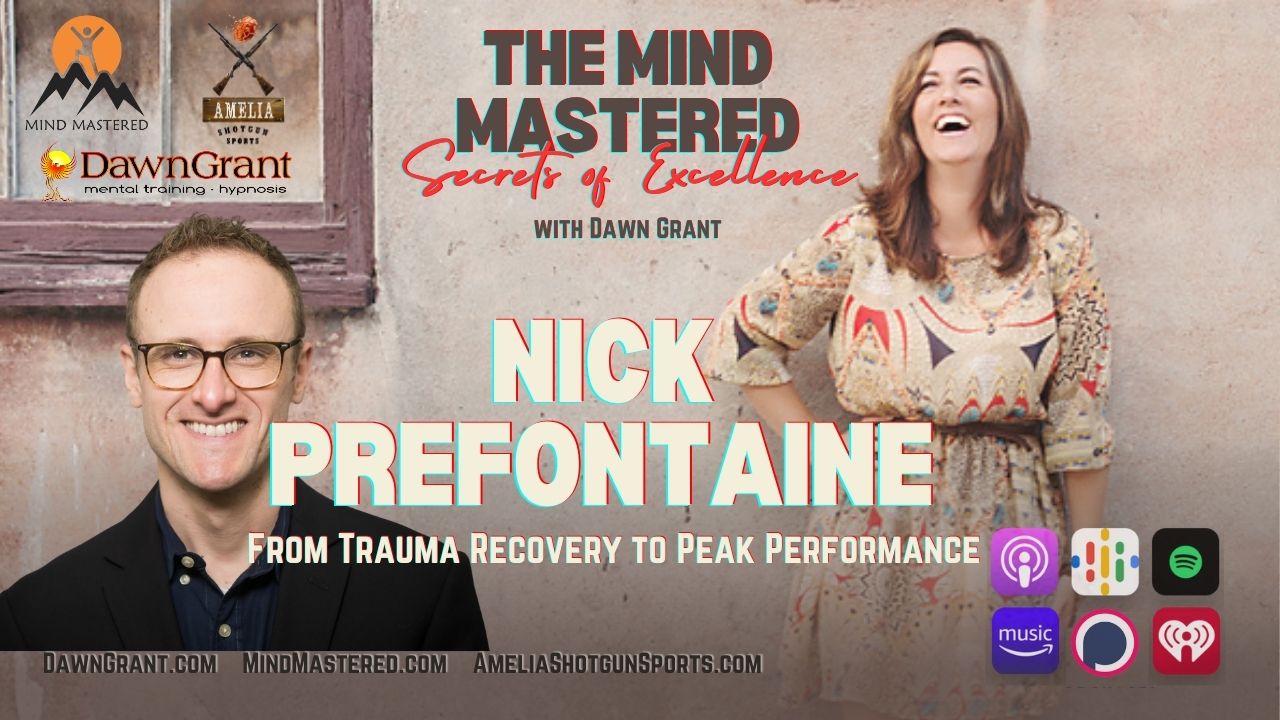
Nick shares the mindset that helped him move through trauma, the role advocacy played in his healing, and how his experience led to the creation of his STEP system for overcoming challenges. He also discusses how the same principles that supported his recovery now guide his work in business, real estate, and personal development.
This conversation is a powerful reminder that setbacks do not have to define your future—and sometimes the smallest step forward can become the beginning of a completely new life.
Podcast Transcript:
Dawn Grant (01:13)
welcome folks to the Mind Mastered Secrets of Excellence. This is your host, Dawn Grant, and I am happy to have you here. Always looking for insights and those little secrets of what people
have not only what they've experienced, but what they have gone through and learned from it and helped them to excel in whatever areas of their life that has been their life purpose, their life path. And we've got an interesting life path here with Nick Prefontaine. So Nick, thank you for being here and I'm really excited to hear your story. So thank you.
Nick Prefontaine (01:53)
I'm so excited to be here, Don. Thanks for having me.
Dawn Grant (01:57)
Yeah, you're welcome. ⁓ For the listeners, if you could give a quick, just a short overview as a highlight of what they're gonna get through this whole podcast, that would be helpful and then we'll dive in deeper.
Nick Prefontaine (02:14)
Sure, yeah, no, I love to share ⁓ my story and what happened to me when I was only in eighth grade at ski club with my friends and overcoming that adversity and a little bit about my story and my intro into ⁓ real estate and then led to what I'm doing today and all throughout my life I've always had this voice in the back of my head.
No matter what I'm doing, that's always telling me that, okay, that's great, but what you really need to be doing is telling your story from stage and helping trauma survivors thrive with the rest of their lives. So no matter what I'm doing, I've always had that voice. And since I've been on this journey of more intentionally sharing my story, like it happened for the past five years,
There's been no voice in the back of my head. So that leads me to believe that I'm doing exactly what I was put in this earth to do.
Dawn Grant (03:18)
I like that. I really find that fascinating and you're following your intuition, right? So yeah, let's go back ⁓ because you did have a traumatic event happen early in your life. So prior to that, where were you living and what were you doing for fun and what was your life like?
Nick Prefontaine (03:38)
Sure, all, mean, kind of my story, if anything, ⁓ starts back when I was in eighth grade. So if I remember, my accident happened when I was in eighth grade. So if I can remember from that time before my accident, ⁓ I was a very active kid. So I was involved in, know, premiere this and premiere that. And I was really into soccer.
was doing like three different teams I was a part of. ⁓ actually the summer before the season, excuse me, the fall season, the fall of 2002, I said to my parents that, listen, I just want to take a break and I want to like just be a kid and just hang out with my friends. And I was snowboarding.
Dawn Grant (04:12)
wow. That's a lot.
Nick Prefontaine (04:35)
at the time and skateboarding. So I just wanted to hang out and be a kid and be with my friends. And ⁓ it's interesting to me that ⁓ having that focus and just, loved to snowboard. That was my first love. So the only reason I would skateboard was because I couldn't snowboard. So ⁓ it was skateboarding, ⁓ just spent it hanging out, being in a...
Dawn Grant (04:41)
Yeah.
Okay.
Nick Prefontaine (05:03)
I was only in eighth grade, 14 years old, 13, 14 years old. And it's interesting that that fall, the fall of 2002, I had actually gone, been to, there was a local, there was a hill. I'm not gonna call it a mountain, but there was a hill in our town, Ski Ward, that only has a few runs, but.
Dawn Grant (05:21)
Hmm.
Nick Prefontaine (05:30)
I used to always go there and I remember that fall before my accident, I actually went there from the day that they opened. I think they opened on Thanksgiving or right around there. I went every day for like 30 days or something crazy like that, including the holidays. So including Thanksgiving and Christmas day, was there some mornings.
Dawn Grant (05:50)
⁓ wow.
Holy,
that's serious. Yeah.
Nick Prefontaine (05:59)
I was loving it. ⁓
was having a blast because that was really my ⁓ first love, ⁓ you want to call it that. And it's interesting that it was either there or it was at S.K.E. Club with my friends and everything. ⁓ Yeah, I absolutely loved it.
Dawn Grant (06:11)
Yeah.
Nick Prefontaine (06:24)
We had actually, it's funny because I go on vacation every year or when I was younger, when I was that age, 14 years old, we would always go up to Stovermont every winter. We had a week in January, a timeshare. And those last couple of years ⁓ on like right before my accident in 2003 and those few years before my parents always let one, like my sister and I,
Dawn Grant (06:39)
Yeah.
Nick Prefontaine (06:53)
have us bring a friend and we have to be there with a friend that week. ⁓ it was interesting that we just got done that and we just got back and ski club started around that time in January. And it was funny because we had ski club. So the day of my accident was, it was interesting because it was ski club Wednesday.
Dawn Grant (06:54)
Okay, yeah.
Nick Prefontaine (07:20)
And it was always a big deal because we got released a little bit early from school whenever we ask you club. And I don't know if you remember, I'm sure you do, but when you're at that age, when you're in eighth grade, any bit of class you can miss is the best thing in the world. So we got released a little bit early and we were pumped. My friends and I actually brought our snowboard gear onto the bus to get ready. So as not to miss a precious moment once we got to the mountain.
Dawn Grant (07:24)
Yeah.
Right.
No.
Nick Prefontaine (07:50)
And we got to the mountain and headed straight for the chairlift. And on the chairlift ride up, we noticed that it was very icy because it had been raining earlier in the day. So people were wiping out everywhere. ⁓ needless to say, we weren't ⁓ like inexperienced. We knew what we were doing. So that wasn't slowing us down. So, and where the chairlift went over,
Dawn Grant (07:58)
Yeah.
Where I got ya, yeah.
Nick Prefontaine (08:17)
I was actually right over the terrain park where all of the jumps were like the jumps and the rails and the half pipe and everything. So I knew as soon as I saw it that I had to go off the biggest jump in the terrain park. So ⁓ there was, I mean, there was no doubt in my mind. was, it was, I was already thinking about what we would do after I landed that huge trick. So ⁓ got to this hop, buckled into my snowboard, took a breath of that crisp winter air.
Dawn Grant (08:23)
Yeah.
⁓ Okay.
Right.
Nick Prefontaine (08:45)
and confidently charged towards that jump with all my speed. And going up to the jump, I caught the edge of my stoneboard, which threw me off balance. And that's the last thing that I remember.
Dawn Grant (08:56)
wow.
Nick Prefontaine (08:57)
So they wanted to bring a helicopter to the mountain to rush me to the hospital. They couldn't because it was too windy. So they had to send in an ambulance. And out of all the paramedics on staff, there was only one who could intubate right in the spot. And I needed that to be able to breathe. Lucky for me, he was one of the paramedics that was actually in the parking lot when my accident happened.
Dawn Grant (09:04)
Yeah.
⁓ wow.
Nick Prefontaine (09:27)
There were several things that had to break the exact right way for me to be able to be here today and tell this story. That was the first one. ⁓ Secondly, although I didn't have a helmet on, ⁓ the only protection that my head had was my goggles. And I wore some goggles, you know, like over your eyes, very thick with a lot of padding. So not only did they brace my impact, but as I continued to roll down the mountain and continued to hit my head,
Dawn Grant (09:34)
Yeah.
Right.
Nick Prefontaine (09:57)
the doctors, ⁓ experts, eyewitness account said that not only did they brace my fall, but as I continued to roll down the mountain, the goggles moved with each impact to cushion each well between my head and the ice. And the third thing ⁓ that I think is probably the most important is ⁓ that my parents were there to kind of
Dawn Grant (09:58)
gosh.
geez.
Nick Prefontaine (10:26)
play interference, if you will, and protect me from the negative information, the not so good news, not so good news, not so good news, as you can imagine, because doctors, liability-wise, they're not doing anything malicious, but liability-wise, they can't paint a rosy picture. Well, they went into my room when I was in a coma, I was out. They figured, oh, he's...
Dawn Grant (10:46)
Mmm.
Nick Prefontaine (10:53)
He's out, he can't hear me. ⁓ So they went to share the news in front of me and my mom stopped them and she said, no, no, not in front of him because she understood that even though I was in a coma, I was still taking in information. So she made the doctor step outside the room and then once they were there, that's when they shared that I probably wasn't going to be able to walk.
Dawn Grant (10:56)
Yeah.
Nice.
Yes, good for her.
Nick Prefontaine (11:22)
talk or eat on my own ever again. And even if I came out of the coma, there was a good chance that I would need 24-hour care for the rest of my life. And my parents didn't accept this like so many patients do as a death sentence. So they took the information, thanked the doctors, and allowed me to treat it like any other situation.
Dawn Grant (11:26)
Yeah.
Nick Prefontaine (11:47)
this was really no different in their mind to any other challenge that I had faced up to this point in my life. I really, Don, didn't see the difference. So as soon as I was aware of my surroundings and the work that was left in front of me, I treated it like any other situation. ⁓ I ended up being in the coma for three weeks. I really don't remember a month because it was a partially induced coma.
Dawn Grant (11:54)
Right.
Right.
Nick Prefontaine (12:14)
They had to wait for the swelling to come down in my room. And it was at that point that I was transported to a rehab hospital in Boston. And that's where I really began my journey, if you will. And my first memories start, that's where they start. And I started to, at that point, unknowingly use a system.
Dawn Grant (12:17)
Mm-hmm.
Nick Prefontaine (12:41)
to not only make a full recovery, but run out of the hospital. And that's what I teach to this day. That's the step system. So what I can do is give like a 10,000 foot view of the step system. And if anyone's interested at the end, I can let them know how they can download the whole step system for free. So.
Dawn Grant (12:49)
Interesting.
Interesting.
I do want to cut in and say that you're reminding me of a client that I had many moons ago. she had hired me because being a hypnotist, right? She had hired me because she was looking to pass the bar and she had gone to school to be an attorney and she had failed it several times and she was on her last attempt.
Nick Prefontaine (13:05)
Go ahead, go please.
Dawn Grant (13:31)
And she hired me because she knew that she had this underlying belief that she wasn't smart enough, right? So what was interesting is that in hypnosis, like you can give somebody suggestions like you are smart, you're brilliant, you're blah, blah, right? So that's one technique. But another technique is to go into the memory banks and to do something called regression to the cause.
So, you know, she came in frustrated because she only had one more opportunity to pass the bar and knew that she had this underlying belief, but didn't necessarily know why. So in hypnosis, we do this regression to the cause. And she went back to when she was in a coma as a kid and she had had a major accident and the doctor in the room, she could remember him saying she won't be able to do much more than flip burgers at McDonald's.
And she was able to give detail of her, you know, her mother and the doctor all at the foot of the bed. And while she was in that coma state, that had basically gotten in her head, right? But she remembered that, she didn't just remember that in hypnosis, she remembered that after, and she had already told her mother that she had heard it. But it was still haunting her basically, like that belief in there. But that's some proof that your mother was onto something.
⁓ Yeah, because it's not like your hearing shuts down, right? You can still hear. And that stuff, you've still got like a program running. It's like a computer running in the background. Like that program's still running. That system is still functioning. That's what's considered being alive, you know? And yeah, so good for her knowing how that could have impacted you and making sure that they didn't do it. Yeah. ⁓
Nick Prefontaine (15:25)
Yeah,
yeah, it was definitely, definitely important. ⁓ Very important to my, it's a big piece of my story. So ⁓ after, after I was transported on to the rehab hospital, I started to unknowingly use this ⁓ STEP system and STEP is an acronym, it stands for support. So ⁓ support, make sure that you have the support of your family and friends right from the beginning. And this is going to have you falling back.
Dawn Grant (15:33)
Yeah.
Yeah.
Nick Prefontaine (15:55)
on relationships that you built prior to your setback. T is trust. So trust that once you take your first step, your next step is always going to be available to you. ⁓ This also starts, and you and I were talking a little bit before we jumped in here about this, this also starts with listening to that voice that we have, that we all have inside of ourselves and making sure you follow it. So
Dawn Grant (15:59)
Mm-hmm.
Hmm.
Mm-hmm. Mm-hmm.
Mm.
Nick Prefontaine (16:24)
⁓ After I was transported to the rehab hospital, I can remember, this is even before I could talk, I can remember overhearing my parents and they were talking with my team of doctors and therapists and they were saying, ⁓ okay, what do we need to do to make sure Nick makes full recovery? I heard in the back of my head, you're going to run out of the hospital. So then running out of the hospital became our common goal.
Dawn Grant (16:37)
Yeah.
Yeah.
Nick Prefontaine (16:52)
So E is energy, maintaining your energy allows your body's natural ability to be able to heal itself and medication has the potential ⁓ done to get in the way of that. unless it was absolutely critical to my survival, my parents opted not to have any medicine. So a month after I
Dawn Grant (16:59)
Yeah.
Hmm.
Nick Prefontaine (17:19)
I, after my accident, when I was transported to the rehab hospital, my parents needed to get me off of the medication. So ⁓ the way that I always, the story, if you will, ⁓ illustrates this point is after I was transported to the rehab hospital, I still wasn't clear to walk yet on my own. So I would have to have, ⁓ and I would always have my dad or an uncle or grandfather stay with me at night.
Dawn Grant (17:41)
Yeah.
Nick Prefontaine (17:48)
And then I got up and this particular time my grandfather was there with me and I get up in the middle of the night and I had to use the bathroom. Well, he couldn't hear me because I couldn't really elevate my voice. So I figured, oh, okay, I'll just lower the bed and I went to the bathroom. Nothing happened. But I got back to the bed and everything. The hospital found out and I say they freaked out.
Dawn Grant (18:07)
Let's do it. Yeah.
Yeah. Yeah. ⁓
Nick Prefontaine (18:17)
We didn't have this liability, blah, blah, blah. then he's like,
here's what we're going to do. We're going to give him this many CCs of this great new medication before bed. Uh, so that way he can sleep the other night. And my mom heard this and she's like, no, you're not just tell him not to do that again. So they told me not to do that. And of course it didn't happen again. But if I didn't have someone there, if I didn't have an advocate with me, they would have just gave me.
Dawn Grant (18:26)
yeah...
Nice.
Nick Prefontaine (18:46)
medication just to make it easier.
Dawn Grant (18:49)
Yeah, yeah, hear you.
Nick Prefontaine (18:51)
I'm not diminishing the work of doctors and doctors and everything, but I'm just saying you gotta be your own best advocate.
Dawn Grant (18:55)
Right.
Yes, you do. Yeah.
Nick Prefontaine (19:00)
Finally, P is persistent, so once you've taken your first step, keep getting up every day and taking your next step, no matter how small. And by continuing to move forward every day, you are building an unstoppable momentum. So if you fast forward less than 60 days later, after being transported to rehab hospital, I realized my goal of running out of the hospital.
Dawn Grant (19:26)
Did the doc, did you verbalize that goal? Did you tell anybody?
Nick Prefontaine (19:32)
Everyone knew. Everyone knew. My therapist and doctors that we all met with weekly, they all knew my goal and we were working towards that. But I was 14.
Dawn Grant (19:44)
And you were how old at that time? Yeah.
Nice.
Nick Prefontaine (19:49)
I really want
people hear my done. They hear my story. They're like, great. Okay, awesome. So you just went back to life. Like, no, that was that was a start. If anything, it wasn't the end. I had to continue to go to outpatient therapy for another six months for those same three things, the physical occupational and speech therapy, along with being tutored.
Dawn Grant (20:02)
Right.
Nick Prefontaine (20:16)
all summer long in order to continue on to high school with the rest of my classmates.
Dawn Grant (20:21)
What were
the injuries? Do you remember what the actual injuries were so that they were telling you that you wouldn't be able to walk and eat and all that? What was it, brain injury or were, you do have broken body parts? What was, was how?
Nick Prefontaine (20:36)
Someone
called me, I don't know if the word called me out on it or the phrase called me out on it is appropriate, but they said, ⁓ similar to what you just asked me, what were the injuries, what happened? And I said, just a traumatic, I said, no, just a traumatic brain injury. And they said, just a traumatic brain injury? So I drank a lot of milk. I used to love cereal. I still do love cereal, but.
Dawn Grant (20:54)
Ahaha!
Nick Prefontaine (21:03)
The reason I say that is I didn't break a bone ⁓ with the accident.
Dawn Grant (21:08)
That is incredible. Because you did say ⁓ your board hit, I guess, on the corner and caused you to flip, but you rolled a while. How far did you go down that hill? And you kept hitting your head, but nothing broke.
Nick Prefontaine (21:26)
Yeah, I don't know
how long it was, but it wasn't like I just hit and then that was it. It was continue to hit and roll down the mountain. Yeah.
Dawn Grant (21:36)
Wow,
yeah. So no broken bones, but traumatic brain injury. And so there's swelling and damage and they thought at that point that that was permanent and you were not gonna be able to function very well. And that would be permanent brain damage. Yeah, interesting. So at the point where you...
Nick Prefontaine (21:53)
Mm-hmm.
Dawn Grant (22:00)
set your mind to, I'm gonna run out of this hospital, were you already starting to see some progress or were you still being told, like, this ain't happening?
Nick Prefontaine (22:12)
⁓ okay, this is a really important point. So I wasn't, I was never told that, ⁓ that I was, they thought I wouldn't be able to walk, talk or eat again. So I didn't know, I didn't know the difference. So, ⁓ I just got up every day and did the best I could. And, ⁓ that's where really the, the step system came from. It wasn't like while I was going through it, I was like, this is the S of the step system. It took me, it took me until, ⁓
Dawn Grant (22:25)
Yeah.
Right.
Nick Prefontaine (22:42)
four and a half years ago to when I was working with my mentor one-on-one. And I'll get to that in my story, which she pulled the step system out of me. yeah, after that, it's a little surreal to me. And I had this same mentor point that was the one who pointed out to me doing that.
Dawn Grant (22:52)
Interesting. Yeah.
Nick Prefontaine (23:06)
Only it was only 18 months later after finishing my rehab from my snowboarding accident and being in a coma that I got my start in real estate and that was door knocking pre foreclosure doors or homeowners that have received a notice of default letter from the bank. ⁓ I would go to them because when you're younger time is compressed. So if you think like six months out, 12 months out, 18 months out, it seems like a lifetime.
Dawn Grant (23:20)
Mm.
Right.
Yeah.
Nick Prefontaine (23:35)
However, it's not that much time. I'm learning as I get older. And so she said, and I was like, ⁓ I never thought of it that way. ⁓ So I would go to these notice of default doors and I would try to set up meetings for one of our investors to meet with them the following week to explore potentially buying their home. looking back at this, and it took reflection.
Dawn Grant (23:37)
Right. It's true. Yeah.
Yeah.
Nick Prefontaine (24:02)
back at this because it was so soon after my accident, less than two years, only 18 months after ⁓ finishing my rehab, was ⁓ basically it was a part of my recovery. I was going door to door and helping people out of their unfortunate situation. So I can continue doing that throughout high school. And then after high school, I got my real estate license, was helping buyers and sellers as a realtor. And then in 2014,
Dawn Grant (24:19)
Yeah.
Nick Prefontaine (24:32)
I started to help my dad. He was an investor at that time. He was buying homes non-conventionally, so without using big down payments, without signing personally on loans. And he was starting to accumulate all these properties and he needed help with someone putting them on the rent to own market. Just some of the ways, like high level, 10,000 foot view that we buy is like,
Dawn Grant (24:55)
Yeah, I got you.
Nick Prefontaine (25:01)
We'll buy in a rent-to-own agreement like a lease purchase. ⁓ If someone has an existing loan, we can close on it subject to the existing loan. Or if they have no debt on the property, ⁓ we can actually buy it with owner financing and close on it and structure principal only payments back to the seller. So those are just some of the ways that we buy to keep it simple. And then we're always selling on a rent-to-own.
Dawn Grant (25:31)
Mmm.
Nick Prefontaine (25:32)
And that's where I came into the picture. So he was starting to accumulate all these properties and he needed help with someone putting them on the rent to own market. ⁓ So this isn't listing them conventionally, this is not ⁓ like as a realtor listing them, but putting them on for sale by owner websites, different for rent websites and trying to get a rent to own buyer that way. So. ⁓
Dawn Grant (25:40)
Mm-hmm. Mm-hmm.
Right.
Nick Prefontaine (25:59)
There's only roughly 18 % of the market who can walk into a bank and get a loan. we go after, not go after, that's the wrong way. We attract the bigger portion, the other 80%, 82%. I'm not saying they're all, we're not saying they're not all good buyers. However, in there, there's a large portion that they're.
Dawn Grant (26:13)
Mm-hmm.
Nick Prefontaine (26:22)
They make great incomes. They have good money for the down payment. They just can't for whatever reason, why can't no bank can get a loan today? we get them into the home, get them fixed up a credit repair, and then give them a path to homeownership. So I started helping him and over the course of the next 13 or 14 months, my income shifted where it didn't even make sense for me to keep my real estate license anymore. And in January of
Dawn Grant (26:29)
Right, right.
Nice.
Hmm.
Nick Prefontaine (26:51)
2016, I resigned my real estate license, started helping him full time as an investor. And ⁓ it was right around that time that 2016 was our first year holding an event. We started holding events where we have the investors that we work with, we call them associates all over the country, ⁓ come in, fly in to see us and we hold an event for them, like a training event. And
Dawn Grant (27:13)
Yeah.
Nick Prefontaine (27:22)
It was right around this time that I started to be able to have that platform, if you will, to tell my story once in a while.
Dawn Grant (27:28)
Hmm, right,
right, right, right, yes.
Nick Prefontaine (27:32)
So I always thought that was it. Like that was okay, I'm listening to that voice. So it got quieter. However, it was still there. So I thought I was listening to it, but I mean, not really. It took until 2019, someone hearing me share my story, Sharon Spano, she...
Dawn Grant (27:42)
Yeah, yeah.
Nick Prefontaine (27:57)
Approached me after hearing me complimented me on my talk and my story and said if I was ever looking to find to my message done and brand another level where I could affect and impact and help the most under people, she could introduce me to some coaches and mentors that have helped her. So.
Dawn Grant (28:05)
⁓ yeah.
nice.
Nick Prefontaine (28:19)
I wasn't ready at this point. I wasn't ready yet because I was actually in the final throes of a voice issue that I had developed in 2012. It sounded like it was really hard for me to get the words out. Like I had a lot of tension in my throat. And well, I developed it and this is like some introspection. I developed it from being to...
Dawn Grant (28:28)
Mmm.
Yeah, what was that all about?
Nick Prefontaine (28:46)
I guess rah-rah, if you will, like trying to set myself up before I get on the phone to Prospect and all my scripts and everything. And I guess I caused damage to my voice. it ⁓ took until I finally wound up at a, no one could tell me what was wrong. So I went to my primary care visit, my PCP, I went to an allergist, I went to speech therapy again on my own. No one could tell me what was wrong.
Dawn Grant (28:52)
⁓ yeah.
Nick Prefontaine (29:14)
And then I finally, a year later, wound up in a voice specialist office in Boston. Right away, and there were only 35 of these in the whole country, so in whole continent. So right away, this is after like putting my head against the wall, like what the heck, no one can tell me what's happening. I knew something wasn't right. So he walked in the room, heard me speak, and right away, nonchalantly goes,
Dawn Grant (29:25)
Yeah.
Nick Prefontaine (29:41)
that? Yeah, we deal with that all the time. We'll get that fixed another time. Go see the front desk and schedule a Botox injection in a few weeks.
Dawn Grant (29:46)
Ha ha!
⁓
Okay, okay, all right.
Nick Prefontaine (29:53)
In of 2013, I started receiving Botox injections into my vocal cords along with their higher level voice therapists, speech pathologists, and it took getting those, I mean I was getting those Botox injections for seven years. It took until ⁓
Dawn Grant (30:13)
Wow.
Nick Prefontaine (30:15)
And this is where that falls into play because when Sharon approached me, I was still in the final throes of that voice issue. So I wasn't ready yet. However, I always hung on to her card, John. And in May of 2021, after the voice issue had worked its way out of my system, I finally reached out to her and I said, okay, I'm ready. What should I do? Who should I talk to? She introduced me to her mentor.
Dawn Grant (30:24)
Yeah.
You do.
Nick Prefontaine (30:44)
who became my mentor and ever since that first conversation five years ago now, almost exactly five years ago, there's been no voice in the back of my head. like I said earlier, that's evidence to me that I'm doing exactly what I was.
Dawn Grant (30:57)
Wow.
Well, because
she mentored you and then what happened? That made the voice go away. How did she help you?
Nick Prefontaine (31:12)
Okay, so that first call that I had with her five years ago, ⁓ it's even crazy to say that it was five years ago, but she said, I told her my story and my goals and what I was looking to do. She recommended that I do the speaker salon that fall in New York City for $25,000. And she said, that's where you get to commute to New York City every Wednesday for six weeks.
Dawn Grant (31:18)
Hehehehe
Nick Prefontaine (31:37)
get to be on stage with up to 10 or 15 other speakers to work on crafting a 10 to 15 minute talk that on the final week, on the sixth week, you get to perform for TEDx, TEDx planners, podcast hosts, event, other event planners, people who are looking to book speakers for their stages. I...
Dawn Grant (31:42)
Wow.
⁓ wow, yeah.
Nick Prefontaine (32:03)
Like at a soul level, I had to do this. And I liked this. This took me.
This took me like, this information about the shared, this took me from like some, I don't consciously remember this. This is from like a lot of deep work and like meditations that I've done with like energy coaches and everything is that this same feeling of like, yes, I'm doing that is like when I was going up the chairlift that day in my accent and I saw the jump, was like, yes, I'm doing this. didn't have that.
Dawn Grant (32:19)
Yeah.
Hmm. ⁓ interesting.
Yeah.
Nick Prefontaine (32:36)
didn't have to
ask anyone, it was like 100%. So during the speaker salon, Trisha pitched the idea of what it would look like to work with her one-on-one. And she said she helped speakers build out their speaker platform. That was 75,000. So I said, hmm, I don't have that in my back pocket.
Dawn Grant (32:56)
boy, that's an investment.
Ha ha ha ha.
Nick Prefontaine (33:05)
but give me a week and I'll figure it out. And I went, I applied for financing, I was approved. ⁓ Six days later, I wired her the money after that phone call with her. And to me it was the, again, it wasn't even a decision. I had to do this. So I'm so happy that I did though, because now I understand what a speaker platform is. ⁓
Dawn Grant (33:23)
Yeah.
Yeah.
Nick Prefontaine (33:33)
She pulled the step system out of me on that first call. She asked me, so you have this amazing story that you ran out of the hospital after your parents are told that you probably wouldn't walk to our feet again. How'd you do it? And it was a video call and I only have like 10 of these calls, 10 hour calls for this. And she asked me and I was like, I don't know. just got up every day and did the best I could. She goes.
Dawn Grant (33:47)
Yeah.
No.
Nick Prefontaine (34:00)
No, not good enough. How did
you do it? Keep going. She like leaned in and I was obviously paying a lot of money for those calls, but I even think I may have ended that first call early because I was so frustrated with her. However, I'm so happy that we went through that process together because she helped pull the step system out of me. Now the step system is basically how I've, how I've,
Dawn Grant (34:24)
Right.
Nick Prefontaine (34:29)
and overcome any challenge or adversity in my life. ⁓ so it's funny that after I had my accident, I think I was so young and I've even wrote about this in newsletters in a few months ago that because I was so young, I just was like, yeah, okay. Well, that thing happened and I just, you know, I got better. was something that happened when I was growing up. Anyone would do that.
And I think it was Tresha who actually said to me, she goes, Nick, that's not normal. Not everyone would do that. To me, it wasn't even a choice. Like, am I just gonna wallow and stay there? Or am I gonna do the work and get better? To me, was just, it was never presented to me like it was a choice. It was just, okay, that thing happened.
Dawn Grant (35:05)
Heh heh... Right?
Nick Prefontaine (35:23)
now we gotta do this work, do this therapy, and then get back home and get back to normal life. So that's how it was always presented to me. then after being on the other side, getting to the other side of the voice issue, I was, and this is right around, if you see the timelines, this is right around the same time. So right on like at the end of that,
Dawn Grant (35:29)
Right.
Hmm.
Nick Prefontaine (35:51)
I was probably, when that woman heard me talk, I was probably, I had two more Botox treatments left, both within six months of each other. And like it all happened at the same time. What's really interesting, and then when I got to the end, so like basically a year later after Sharon gave me that in 2020, I was like,
Dawn Grant (35:59)
Yeah.
Yeah.
Nick Prefontaine (36:18)
All right, I have something here. Like I have something here that I need to be sharing with the world and helping people ⁓ that are going through any other challenge or trauma or crisis.
Dawn Grant (36:27)
Yeah.
Nice, nice. And then, well, you have three, what, bestselling books, right? And that, did that all, mm-hmm.
Nick Prefontaine (36:40)
Yeah, those
are are those are with the you know, shared the the real estate the boys. So I'm still a partner. I am very much involved in that business as well. So we buy and sell homes creatively on on terms is what we like to call it without using any of our credit or money or big investor down payments or anything and sell them on rent to own. So I'm still very much involved in that business. And the three best selling
Dawn Grant (36:46)
Yeah.
Nick Prefontaine (37:10)
Best-selling book that I'm part of that I'm an author on are they're all real estate related the new rules of real estate investing 24 leading expert share their niche what they what they think theirs is the best obviously, but ⁓ We and we're biased we think ours ours is best. However ⁓ We're realists and we understand that not everyone's gonna connect to us.
Dawn Grant (37:15)
I got you.
Right.
Nick Prefontaine (37:38)
That's why we share that book and that was the one that I was probably the most heavily involved in. The other one was Sell With Authority and then my dad's bestseller, The Real Estate on Your Turns, I was very, very much involved in the editing and everything that went on with ⁓ that. The thing is, without, I mean, since working with Tricia, ⁓
Dawn Grant (37:56)
Right.
Nick Prefontaine (38:04)
I've been speaking at brain injury associations at their conferences, like they do yearly conferences. Some of them, like the Brain Injury Association does a few webinars a couple times a year. So I've done a webinar for them. And now I'm starting to get my message and the step system and story out there ⁓ by podcast guesting, ⁓ getting in front of more and more people and sharing my message.
Dawn Grant (38:11)
Right.
Right, right, right, nice, nice. Well, it sounds like you've got a great journey that you've been on. ⁓ go ahead, I know you gave a little summary of the acronym, the STEP. ⁓ You had mentioned earlier that you would get into that a little bit and then tell people how they can access it. So.
Nick Prefontaine (38:54)
Yeah,
is a great point for that. ⁓ what we went over is really only like a 10,000 foot view of the Step system. So if you go to my website, nickprefontaine.com forward slash step, you can download the entire Step system for free today. And this is especially important if you're out there and you're going through a life crisis.
Dawn Grant (39:04)
Yeah.
Nick Prefontaine (39:24)
into trauma or even it's just business wise going like you're going through a hard time in your business this is a great tool and resource for you because the step system even though it was birthed out of adversity and the trauma of my stoneboarding accident and then having to overcome my voice issue the applications of it are so
Dawn Grant (39:45)
Right.
Nick Prefontaine (39:53)
far reaching and really wide ranging that you can apply it to anything. mean, how do you think I ⁓ started this business Common Goal? ⁓ It was a step system, making sure I was doing a little bit of something every day that was gonna continue to move the ball forward. So ⁓ you really can apply it to anything. So ⁓ I mean, it's a part of who I am, it's a part of my story, the real estate portion.
Dawn Grant (39:59)
All right.
Right.
Nick Prefontaine (40:23)
So if anything that I mentioned on how we buy and sell on terms creatively, interests anyone and you want to learn more, you can go to our website, smartrealestatecoach.com forward slash masters class and you can get registered, register, excuse me, for a free master's class that's going to teach you all about how we buy and sell on terms. And if by the end you...
Determine that it is a good fit for you and you want to learn more You can take that first step
Dawn Grant (40:55)
Nice, nice. What would be, based on your journey and your experience, what would be one piece of wisdom, insight that you'd wanna pass on to people? What's one of the secrets of excellence? What's a little tidbit?
Nick Prefontaine (41:13)
Great question. I would say we all no matter what we're going through now it can be a Accident trauma crisis it can even be Growing your business ⁓ Taking that next step and growing your business is we all have an idea We all have an idea in our heads and we know ⁓
Maybe intuitively and maybe even not intuitively, but we know what we should be doing. ⁓ What's going to improve our situation. ⁓ So my thing is just take a step towards that. And it doesn't have to be a big step. It can even be a baby step. Because once you even take that baby step, your next step is always going to be available to you. However, I see so many people they get, they... ⁓
Dawn Grant (41:43)
Mm-hmm.
Yeah.
Nick Prefontaine (42:06)
They don't make progress because they get stuck and they don't do anything because they want to know all the facts and all the information. 45 steps in the future. There's no reason for that. Just take a baby step towards a direction that you know you should be going and then your next step is always going to be available to you.
Dawn Grant (42:12)
Right? Right.
I love that. I can see that in my own life for sure and I can see that in clients lives and it's one step at a time, right? And the 12 step is called one day at a time. It's the same concept. Take it little bite-sized pieces instead of the whole thing.
Awesome, I do wanna tell listeners that I have some free goodies and opt-ins for any of my three businesses. You can just go to dongrant.com forward slash free. I do have online courses and free web classes as well. ⁓ This has been really fascinating and I'm glad that the voice, found, ⁓ wait, you found your voice and turned off the voice.
You have a lot going on with voices.
Nick Prefontaine (43:17)
There's so
many, yeah, and it even took me years, like just recently that I was like, I kind of like, this whole voice thing was because I wasn't sharing my story, because I was just trying to be like business focused of ⁓ work, work, work and real estate and sales and everything, because I wasn't sharing my story.
Dawn Grant (43:32)
Yeah. Yeah.
Yeah.
Nick Prefontaine (43:46)
I had a voice issue and I don't know if you're into the chakras, that's like communication. ⁓ I had a voice issue and then once that worked its way out, then I was able to step into my purpose, which is what I'm doing today, which is sharing my story more and more and helping people get through whatever they're going through and be able to thrive with the rest of their lives.
Dawn Grant (43:49)
Yeah.
Yeah.
For sure, yeah.
Nice.
Perfect.
I love that and what inspiration and hope that you're offering to people. So thank you for sharing your story, Nick, and insight and the free stuff. If they go to the website that you had mentioned and your STEP program, sounds like you're really impacting people's lives for the positive. So thank you for sharing it all.
Nick Prefontaine (44:32)
Thank you for having me. This has been fun.
Dawn Grant (44:35)
Perfect, thank you.